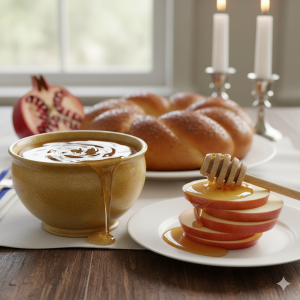
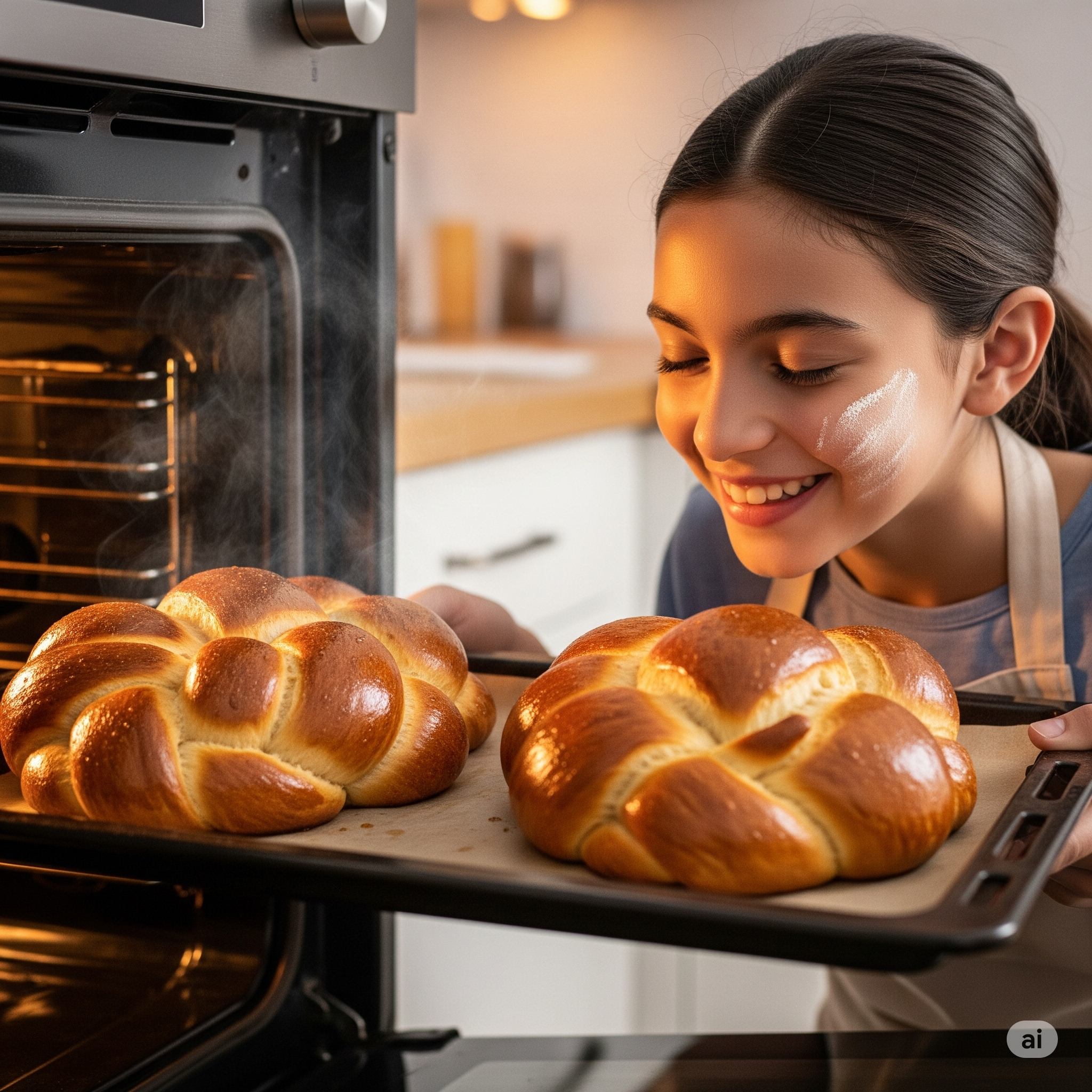
There’s a certain magic that fills a home when challah is baking. The sweet, yeasty aroma wafts through the air, promising warmth, connection, and the simple joy of something made with your own hands. For me, and for countless others, the act of making challah is more than just baking bread – it’s a ritual, a meditation, and a profound way to nourish not just our bodies, but our souls and the bonds that tie us together.
Growing up, the scent of challah on a Friday afternoon was the undeniable herald of Shabbat. It meant family gathered, blessings spoken, and a moment of peaceful respite from the week’s demands. Now, as I carry on this tradition in my own home here in Mevaseret Zion, each twist and braid feels like a tangible link to generations past and a loving embrace for those around my table.
But the beauty of challah extends beyond its traditional significance. It’s a craft accessible to anyone, and the journey of transforming simple ingredients into this golden loaf offers a unique opportunity for personal growth and connection.
The Flourishing of Self: Finding Meaning in the Making
In our fast-paced world, the act of slowing down to create something with our hands can be incredibly grounding. Kneading the dough becomes a tactile meditation, the rhythmic motion a soothing balm for a busy mind. As you watch the dough rise, a sense of anticipation and gentle patience develops. This process, from humble beginnings to a beautiful, fragrant creation, mirrors our own potential for growth and transformation.
Moreover, mastering the art of challah braiding, whether it’s the elegant swirl of a round challah for Rosh Hashanah or the intricate dance of a multi-strand braid, fosters a sense of accomplishment and creativity. It’s a tangible skill that you can see, touch, and share – a reward in itself.
Nourishing Bonds: Sharing the Warmth of Home
Beyond personal growth, baking challah is a powerful act of love and connection. The aroma alone creates a welcoming atmosphere, instantly making a house feel more like a home. Sharing a freshly baked challah with family fills the room with warmth and fosters a sense of togetherness. Each slice is a symbol of care, a tangible expression of love.
And the circle doesn’t have to stop there. Consider sharing your challah with neighbors, friends, or members of your community. In a place like Mevaseret Zion, where community spirit thrives, a homemade challah can be a beautiful gesture of connection, building bridges and fostering a sense of belonging. It’s a small act that can carry significant meaning, offering comfort and a taste of home to those around you.
Ready to Roll Up Your Sleeves? The Challah Recipe
Here’s a basic yet delicious challah recipe to get you started:
Ingredients:
- 1 tablespoon dry active yeast
- 1 teaspoon sugar
- 1 ¼ cups lukewarm water
- 4 cups all-purpose flour (plus more for dusting)
- ¼ cup sugar (plus 1 teaspoon for the yeast)
- 1 teaspoon salt
- 2 large eggs (plus 1 egg for egg wash)
- ¼ cup vegetable oil (or olive oil)
- Optional: Sesame seeds, poppy seeds, or everything bagel seasoning for topping
Instructions:
- Activate the Yeast: In a large bowl, combine the yeast and 1 teaspoon of sugar. Pour in the lukewarm water and let it sit for 5-10 minutes, until foamy. This indicates the yeast is active.
- Combine Dry Ingredients: In a separate large bowl, whisk together the flour, the remaining ¼ cup of sugar, and the salt.
- Combine Wet Ingredients: In a small bowl, whisk the 2 eggs and the oil.
- Mix the Dough: Pour the egg mixture into the yeast mixture. Gradually add the dry ingredients to the wet ingredients, mixing with a wooden spoon or your hands until a shaggy dough forms.
- Knead the Dough: Turn the dough out onto a lightly floured surface. Knead for 8-10 minutes, until the dough is smooth and elastic. It might be slightly sticky at first, but resist the urge to add too much flour.
- First Rise: Place the dough in a lightly oiled bowl, turning to coat. Cover with a clean kitchen towel or plastic wrap and let it rise in a warm place for 1-2 hours, or until doubled in size.
- Divide and Shape: Gently punch down the risen dough and divide it according to the braiding or shaping style you choose (see instructions below).
- Second Rise: Shape the challah(s) and place them on a baking sheet lined with parchment paper. Cover loosely and let rise for another 30-60 minutes, or until noticeably puffed.
- Prepare Egg Wash: Whisk the remaining egg with a tablespoon of water.
- Bake: Preheat oven to 350°F (175°C). Brush the challah(s) generously with the egg wash and sprinkle with your desired toppings, if using. Bake for 25-35 minutes, or until golden brown and the internal temperature reaches 190-200°F (88-93°C).
- Cool: Let the challah(s) cool on the baking sheet for a few minutes before transferring them to a wire rack to cool completely.
Braiding Beauty: Instructions for a 4-Braid Challah
This is a classic and elegant braid:
- After the first rise, divide the dough into 4 equal pieces.
- Roll each piece into a rope about 12-14 inches long.
- Place the ropes parallel to each other on a lightly floured surface. Pinch the tops together to secure them.
- Number the strands from right to left: 1, 2, 3, 4.
- Bring strand 1 over strand 2.
- Bring strand 4 over the new strand 1 (which was originally strand 2).
- Bring strand 2 over strand 3.
- Repeat steps 5-7 until you reach the end of the ropes, pinching the ends together to secure.
- Gently tuck the ends underneath the loaf for a neater appearance.
- Place on a baking sheet for the second rise.

The Circle of Life: Shaping a Round Challah
The round challah, often used for Rosh Hashanah to symbolize the cyclical nature of the year, is a beautiful and meaningful shape:
- After the first rise, divide the dough into 2 equal pieces.
- Roll each piece into a rope about 18-20 inches long.
- Twist the two ropes together, starting from one end.
- Form the twisted rope into a circle, gently tucking one end under the other to secure.
- Alternatively, you can roll one long rope and then coil it into a spiral shape.
- Place on a baking sheet for the second rise.

Savoring the Sweetness
Whether you’re a seasoned baker or just starting your culinary journey, I encourage you to try making challah. It’s an experience that nourishes on multiple levels – the satisfaction of creation, the warmth of sharing, and the connection to tradition and community. The golden embrace of a freshly baked challah is truly something special, a simple yet profound reminder of the beauty that can be found in slowing down, connecting with our hands, and sharing the bounty with those around us.